
A year ago, I posted on LinkedIn about an idea that had been rattling around in my head for a decade.
The idea was simple: what if you could crowdsource fan reactions to live sporting events using wearable data? Imagine watching your team in a playoff game, scrolling down in the app, and seeing your team’s Fan Aggregate Heart Rate spike 25% above baseline. The rival fans? Only up 15%. Your team wants it more. You can feel it — and now you can see it.
I got a ton of engagement on that post. People loved the concept. It wasn’t far-fetched. Today, over 56% of US adults already wear devices that track their heart rate. All that data is just sitting there.
But it stayed an idea. I’m a CEO, not a developer. At least, I haven’t been for a long time; I hadn’t written real code in years, not since the early days of building Validic.
Then something changed.
Claude Gave Me My Coding Chops Back…
In the last six months, we’ve been doing a lot of learning and experimentation with Claude Code. Our engineering and product teams have been exploring how it changes the way we build. That curiosity has been contagious, and the innovation that has come from it has truly blown me away.
I started using Claude Code a few months ago, and something immediately clicked. It gave me the ability to ideate and iterate at a pace that made coding fun again. I could describe what I wanted, work through the logic, and actually create something from an idea. It brought me back to the version of myself that started this company in the first place, the one who just wanted to build cool stuff with data.
With the NCAA Basketball Tournament rapidly approaching (my favorite sporting event of the year), I realized this could be a great time to make my fan heart rate app a reality.
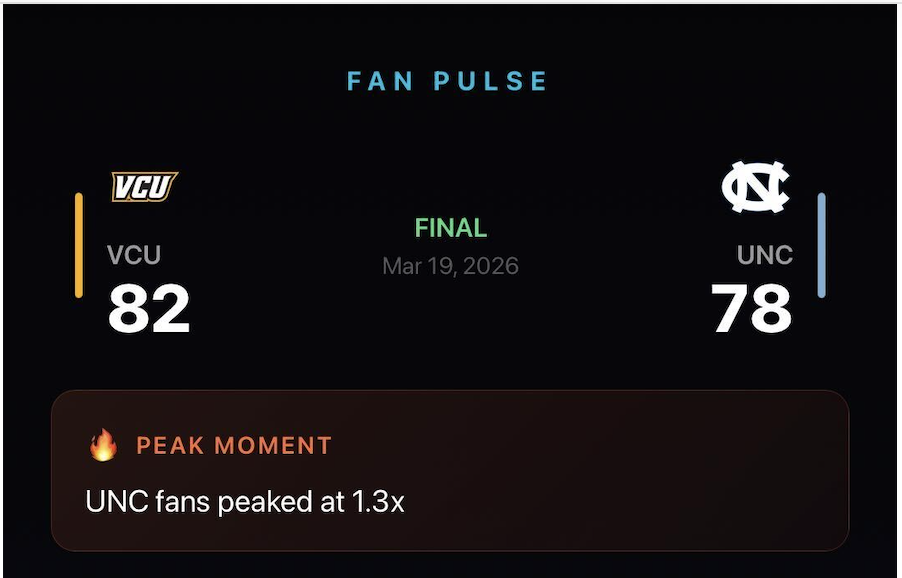
So I built it. It’s called Fan Pulse.
It’s a working app. You can connect your wearable, pick a game, and see an aggregate heart rate feed for fans on each side. By the way, Validic’s APIs and SDKs made it SUPER easy to connect wearables!
…Then Reality Set In
Here’s the thing about building something from a big idea: you find out pretty quickly where the gaps are.
The concept assumes that wearables can stream heart rate data in real time. In theory, they can. In practice? Most can’t, at least not in a way that works for this.
Only Apple Watch for iOS and a handful of WearOS-compatible Android watches expose real-time heart rate data to third-party apps. That immediately narrows your audience from “everyone with a fitness tracker” to a much smaller subset.
And even when real-time heart rate is available, the platforms fight you. Both Apple and Android require an active workout session on the watch to stream continuous heart rate data. There’s no simple API that lets you say, “Just measure my heart rate for the next two hours.” That has real consequences: it drains the battery, logs as an actual workout, closes activity rings, pads exercise minutes, and generally confuses your health history.
Not exactly the seamless fan experience I envisioned.
The Gap Between “Data Exists” And “Data Is Accessible”
Not every experiment ends with a product launch. And that’s fine.
Fan Pulse was a reminder that the gap between “the data exists” and “the data is accessible in the way you need it” is often wider than you’d expect, even for a team that works with this data every day.
We’ve been solving that problem at Validic for over a decade. Tens of millions of people. Billions of data points. Hundreds of device integrations. We know how messy this ecosystem is, and we’ve spent over a decade making it work for healthcare.
But this experiment reinforced something I already believed: the potential uses for personal health data go way beyond what anyone has built so far. The data is there. The devices are on people’s wrists. The ideas are everywhere. What’s been missing is the connective tissue, the infrastructure to actually access and use that data.
Everyone is Becoming a Builder
That’s maybe the biggest takeaway for me. A year ago, Fan Pulse was just a LinkedIn post and a daydream. Today, it’s a working app, built by a CEO who hadn’t coded in years, with the help of an AI that made it possible.
In the age of agentic coding, everyone is becoming a builder. Validic is building the tools your AI agents need so that personal health data can be part of what you use to build.
If you’ve got a wild idea for what you’d do with wearable data, hit me up. I’d love to help you build it.